The drone
How D.E.D.A.L is designed, checked and flown: the structure, the airflow computations, the flight controller and the telemetry.
Design and build
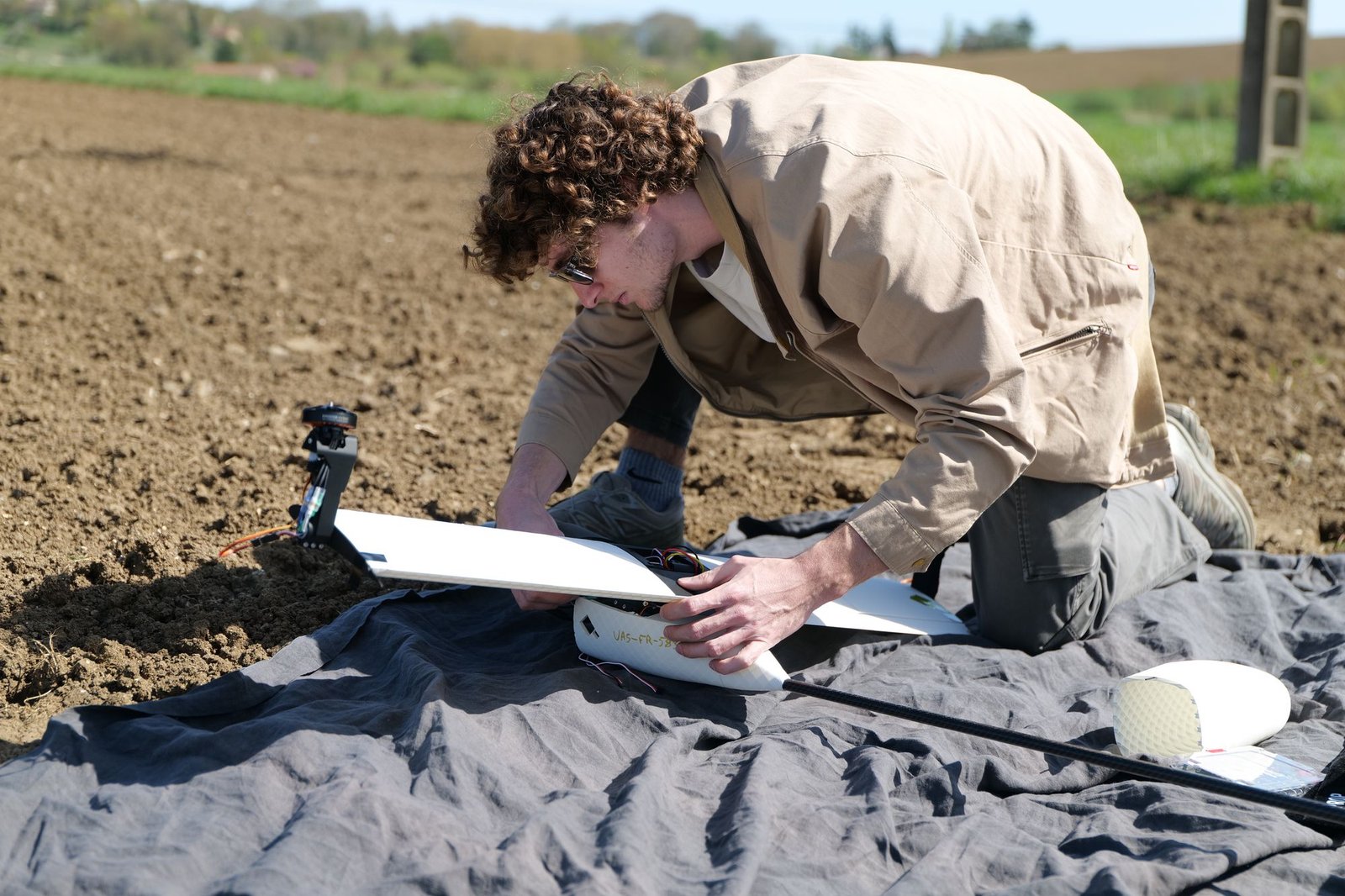
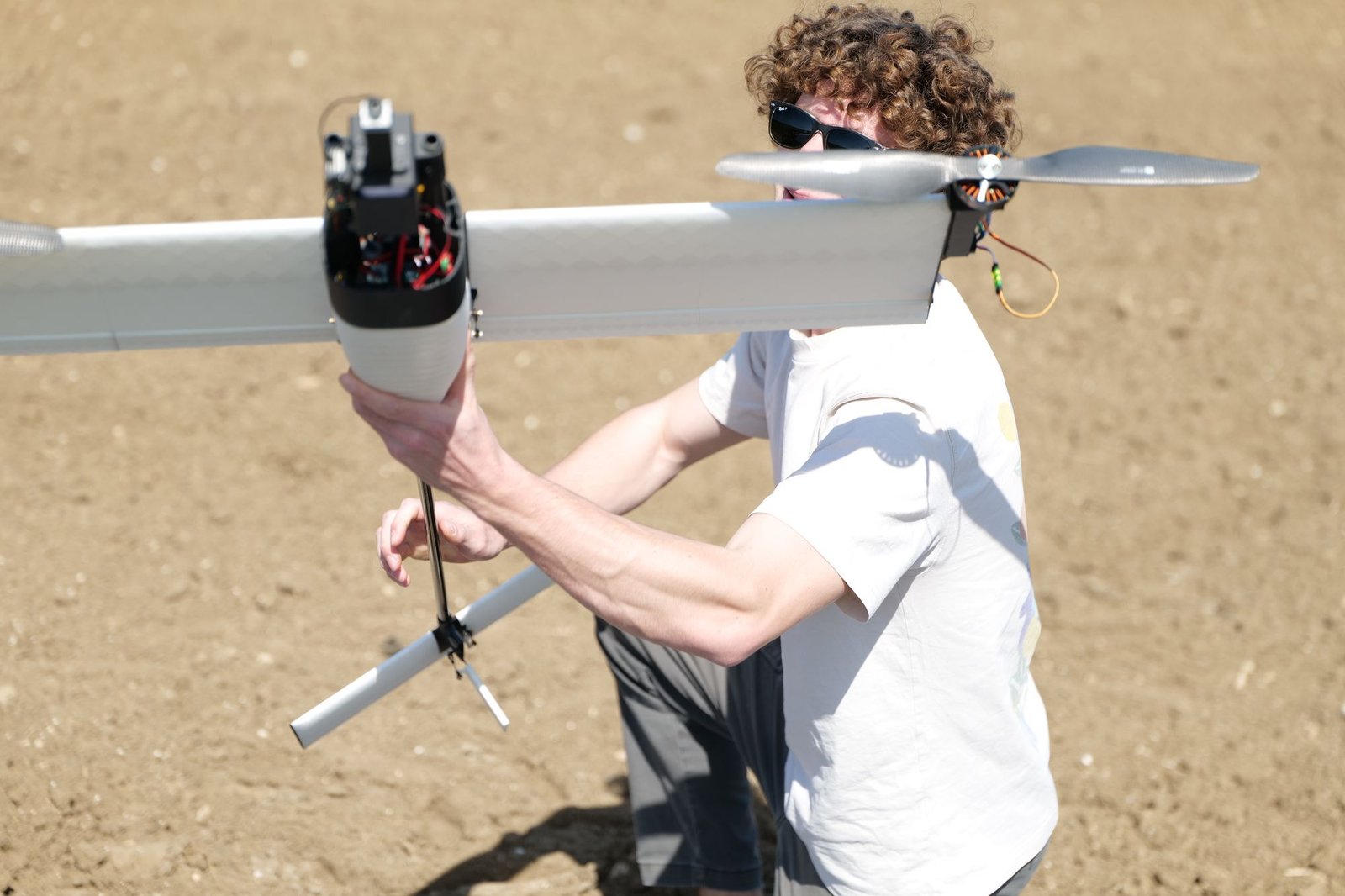
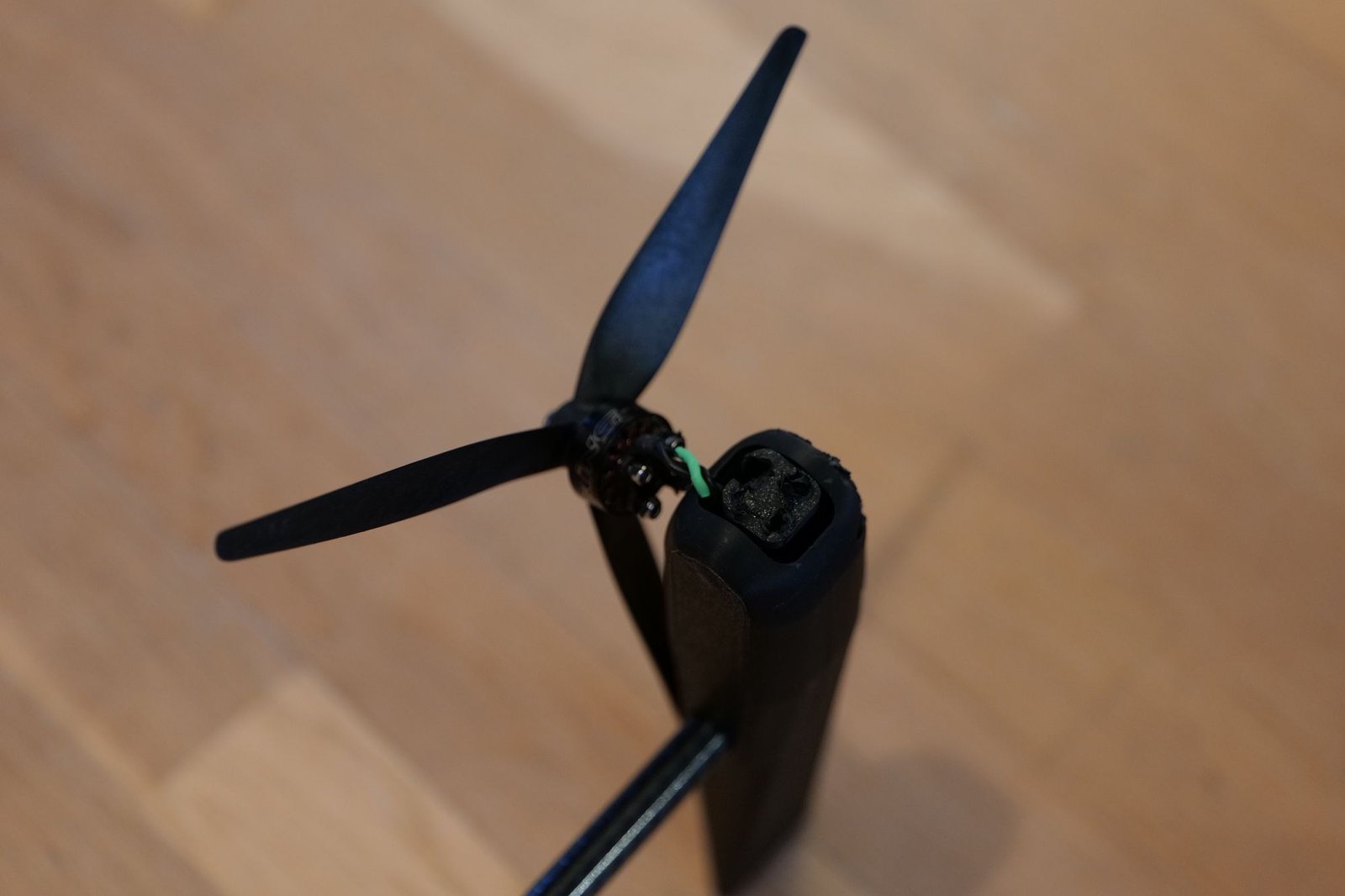
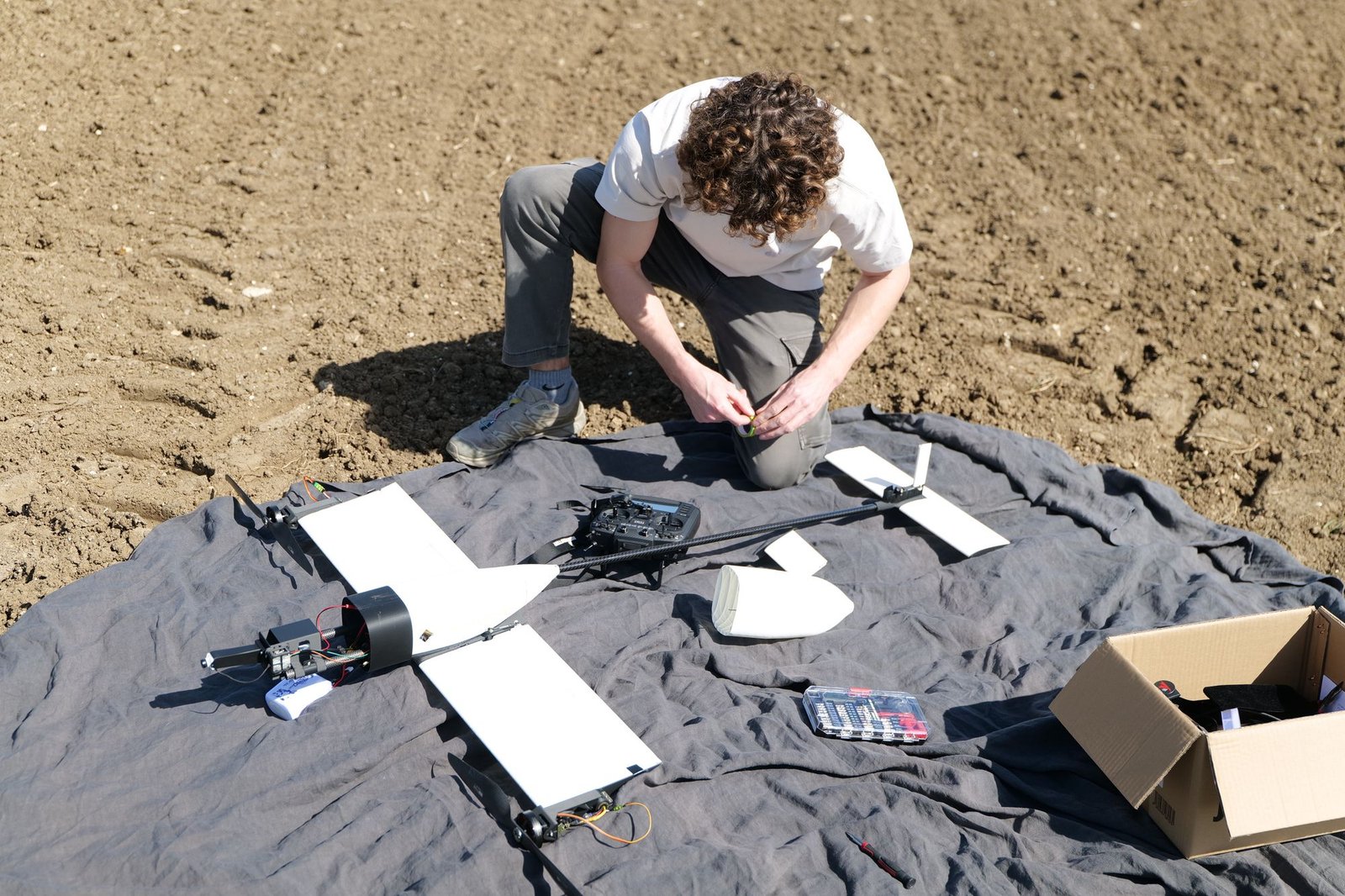
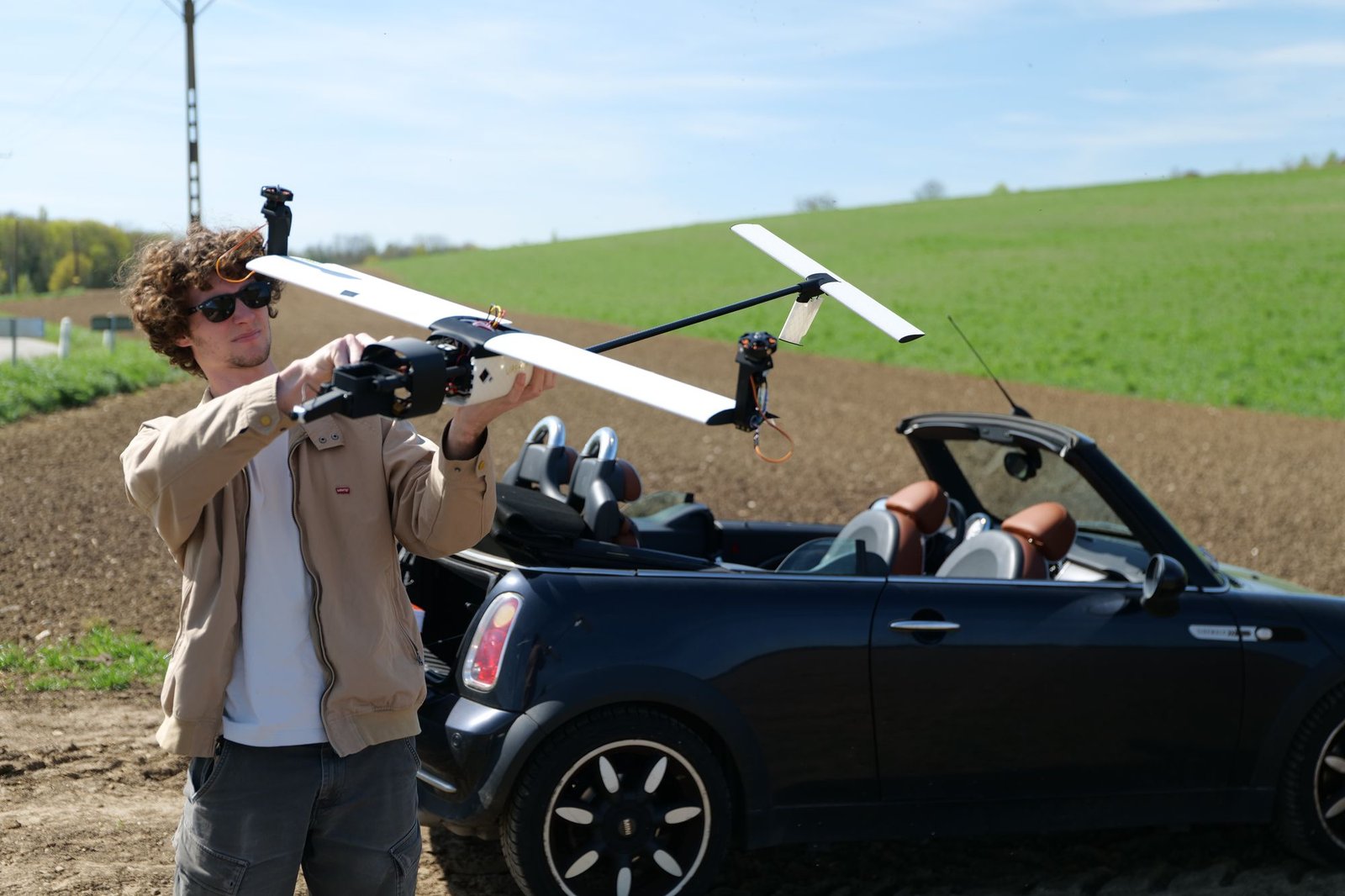
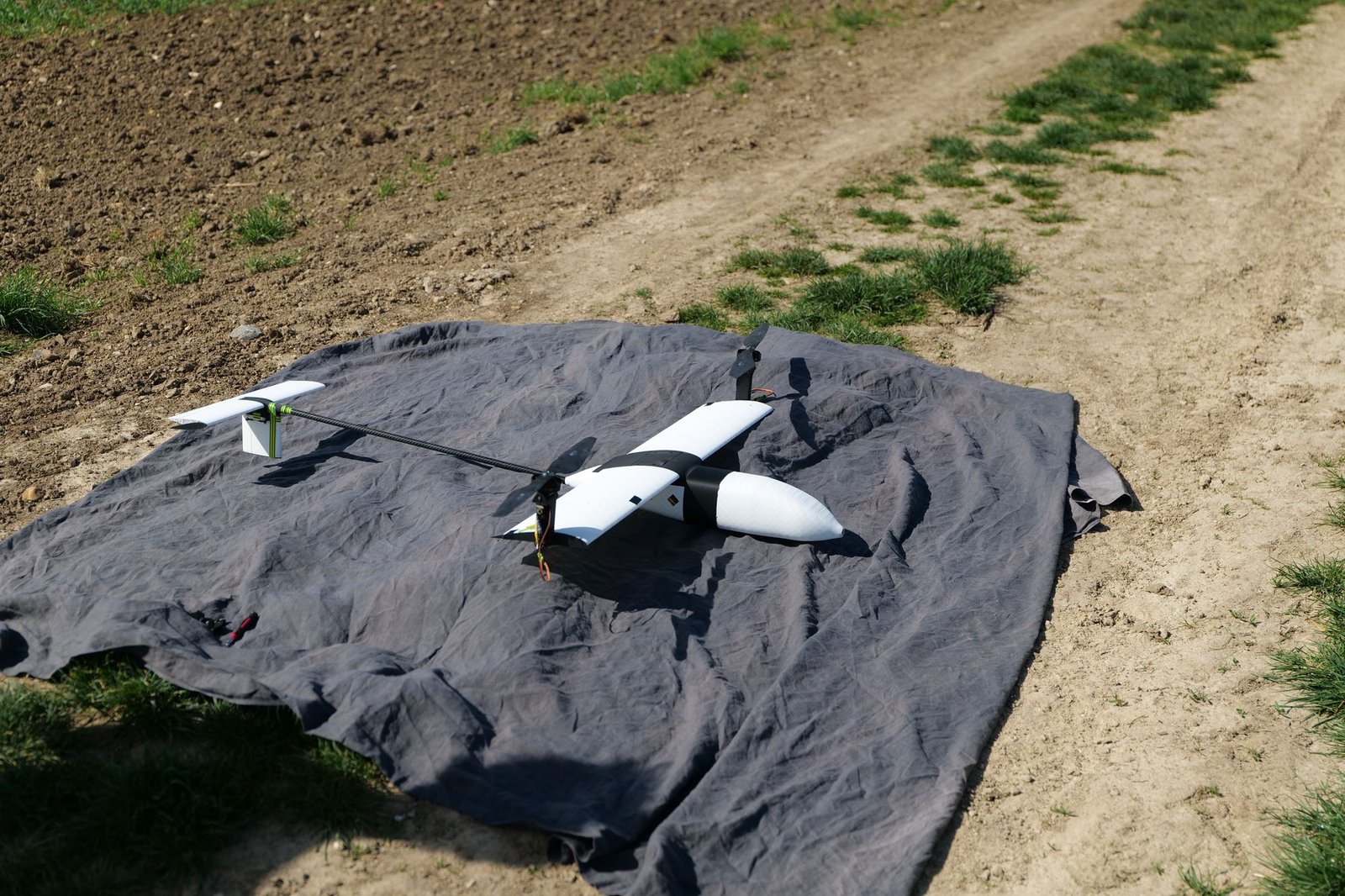
The structure is 3D printed: fuselage, wing, motor mounts and tilt mechanism. The wing was studied in XFLR5 and in numerical simulation, and the motor and propeller were chosen from the maker’s measured curves: in hover, each motor runs at about 45 % throttle.
The CFD tools
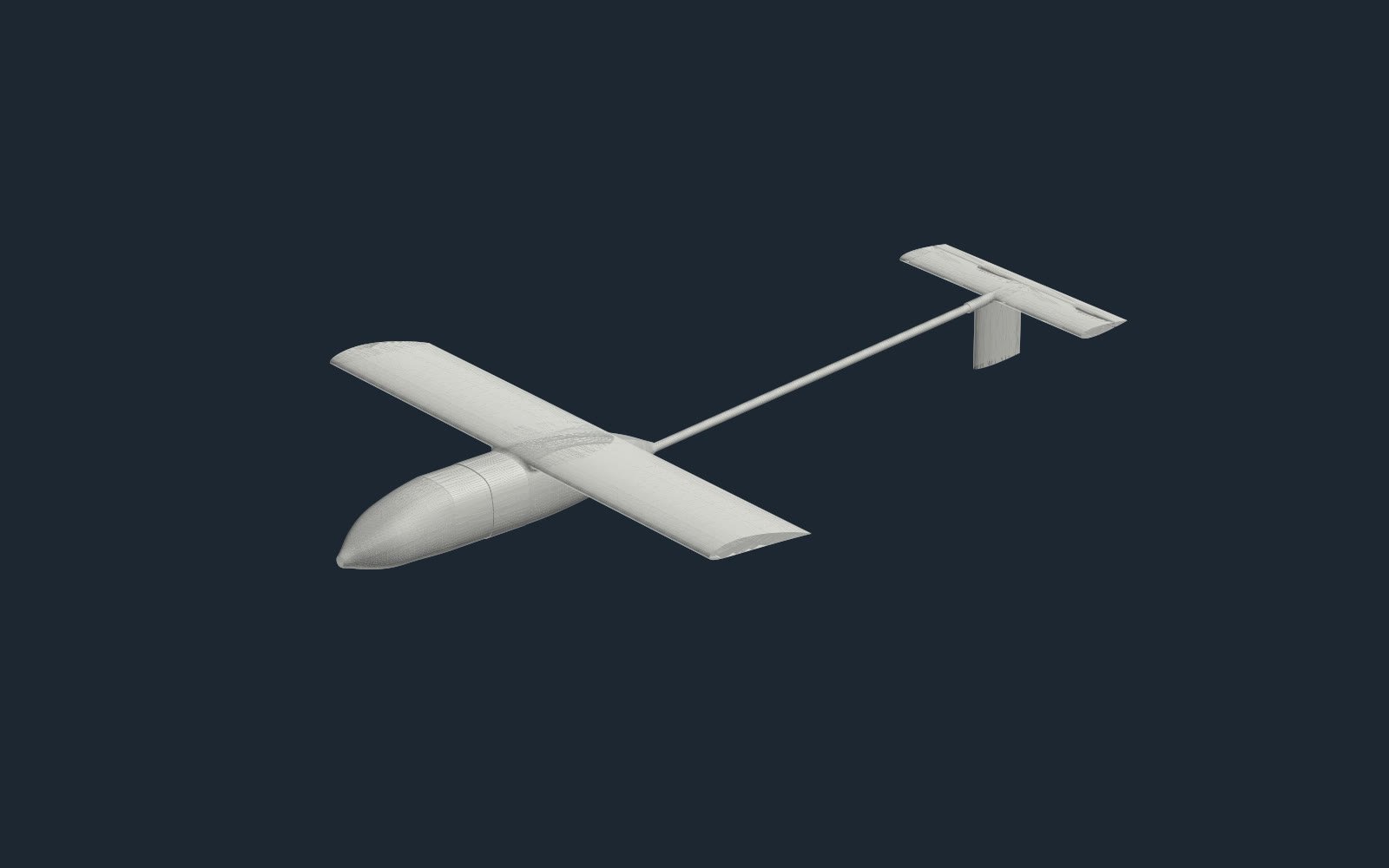
To check the aerodynamics of the whole aircraft, not just the wing, I built an airflow simulation (CFD) tool. It starts from the drone’s geometry taken from its CAD, builds the mesh around it, with a boundary layer sized for the speed, then runs the computation in OpenFOAM.
Out come the lift, drag and pitching moment of the complete drone, enough to check its balance and stability. The tool can also sweep a whole range of angles of attack to plot the aircraft’s polars.
Like DEDAL Studio, it was coded with AI: see AI in my projects.
The flight controller
The drone’s brain is a Teensy 4.1 board running dRehmFlight, an open-source VTOL flight controller written by Nicholas Rehm. It provides the IMU reading, the attitude estimate and the controllers. For D.E.D.A.L, I added:
- the mixing for a tilting twin-rotor: in hover, roll comes from the thrust difference between the two motors, pitch and yaw from tilting each motor;
- three flight modes on a switch, hover, transition and airplane, which drive the central tilt servo; in hover, the motor tilt can be trimmed from the radio and the ailerons act as flaps;
- a choice in flight between three stabilisation modes: angle, rate, or angle with a cascaded rate loop;
- reading the motor controllers’ telemetry: battery voltage, current and capacity used;
- a GPS, with the home point, and the distance and direction back to it;
- a fast SD card logger: about fifty signals, 500 times a second, in a single file per battery. The space is reserved before take-off so that writing never slows down the control loop, which runs at 2,000 Hz;
- a library to talk to the radio (CRSF protocol over an ExpressLRS link): receiving the channels and sending telemetry.
Live telemetry
Every flight leaves two records. The first, complete one is written to the SD card: every signal, 500 times a second, read after landing. The second goes out live over the radio link.
The radio, a RadioMaster TX16S, and the drone’s receiver talk over ExpressLRS. The link works both ways: the radio sends the commands, and the drone sends back its telemetry in the gaps. Bandwidth is limited, so each piece of data has its own rate: attitude, motors and servos 25 times a second, the radio channels 10 times, battery, flight mode and drone state twice, GPS once a second.
Some of these messages follow the standard format and show up directly on the radio’s screen: voltage and current, attitude, GPS, flight mode, link quality. The others are specific to D.E.D.A.L, such as the command sent to each motor and servo, the time since arming, the distance to home or the loop time: only DEDAL Studio can read them.
Plugged into the Mac over USB, the radio passes it all on to DEDAL Studio, which shows it live during tests.