How the project grew
From the first idea to the latest prototypes.
The starting point
On a regular bike or an electric one, much of the energy produced is lost as heat when braking. Every descent, every stop at a red light, that energy disappears when it could be reused. What if it could be stored to help in the hardest moments?
That is where Styx comes in. By capturing that energy and giving it back, it aims to make pedalling smoother and more efficient.
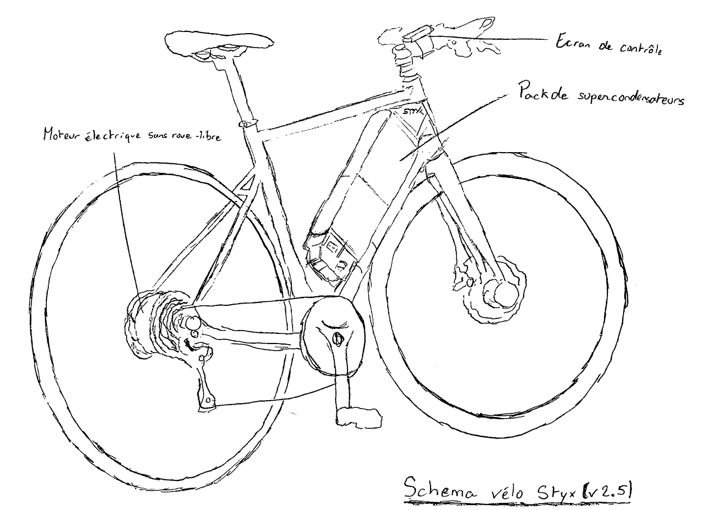
The steps
-
Proof of concept (P1)
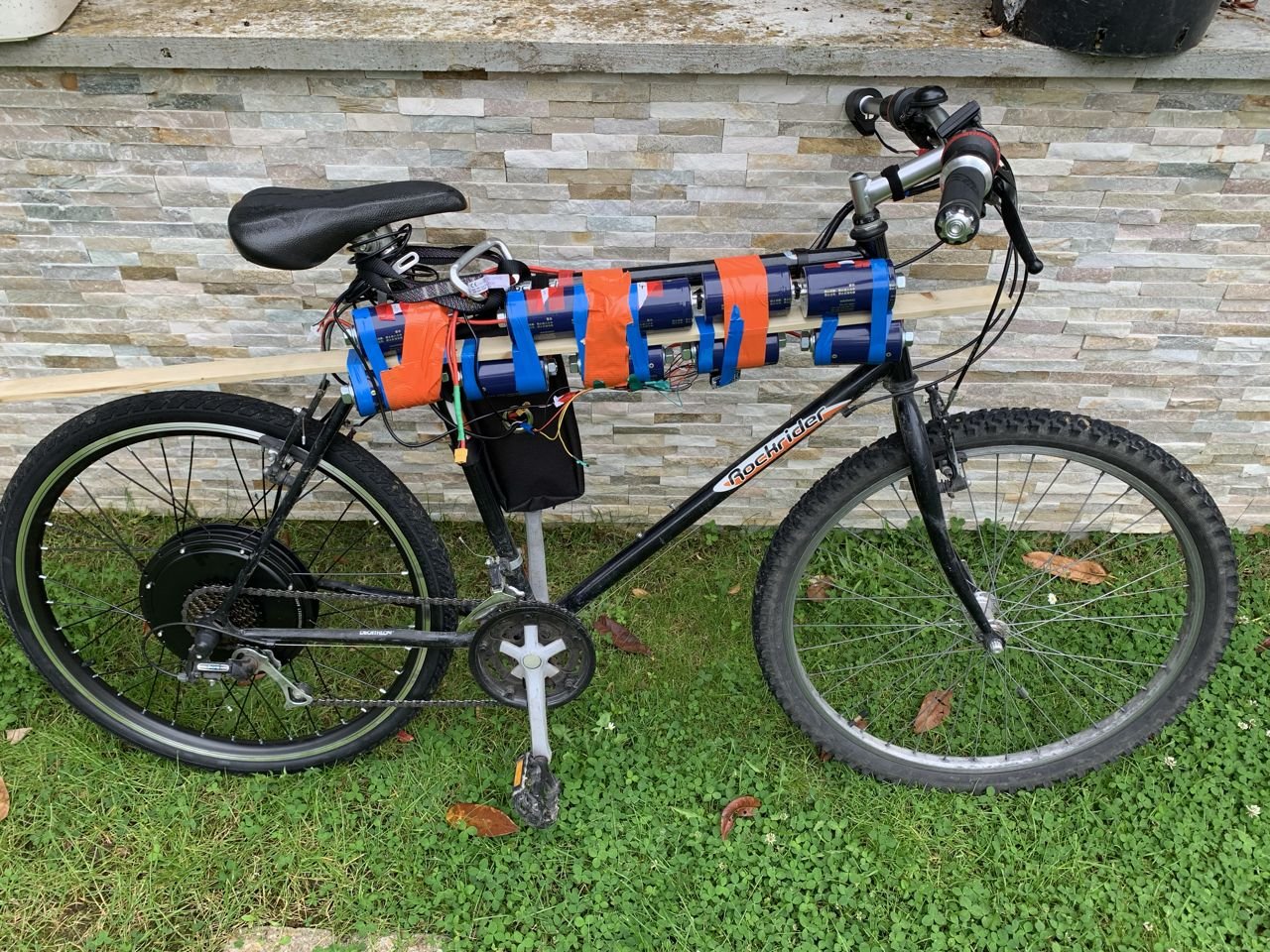
Styx started in June 2024 as an academic project, which gave me the time to explore a question I kept coming back to: how to recover the energy lost when braking and use it when pedalling gets hard?
This project produced a first prototype, a proof of concept. It confirmed the core idea: store the recovered energy in a supercapacitor pack and give it back when the effort gets harder. This first attempt showed the concept’s potential, but also its limits and the many possible improvements.
-
Prototype 2 (P2)
Encouraged by these results, I spent the next six months refining Styx into a more functional, better-integrated system. In January 2025, a second prototype was born, with several major changes:
- a protective casing to hold and secure the capacitors and the on-board electronics;
- a screen showing the system’s key data in real time while riding;
- an SD card module to log and analyse each ride and improve performance;
- a sensor on the brake lever, to engage motor braking and recover as much energy as possible;
- a redesigned electrical layout for the capacitor pack, for better energy management and efficiency;
- a cleaner look, making the prototype more compact and better fitted to the bike.
Each step sharpened the vision behind Styx and taught me more about the technical challenges of using supercapacitors for mobility.
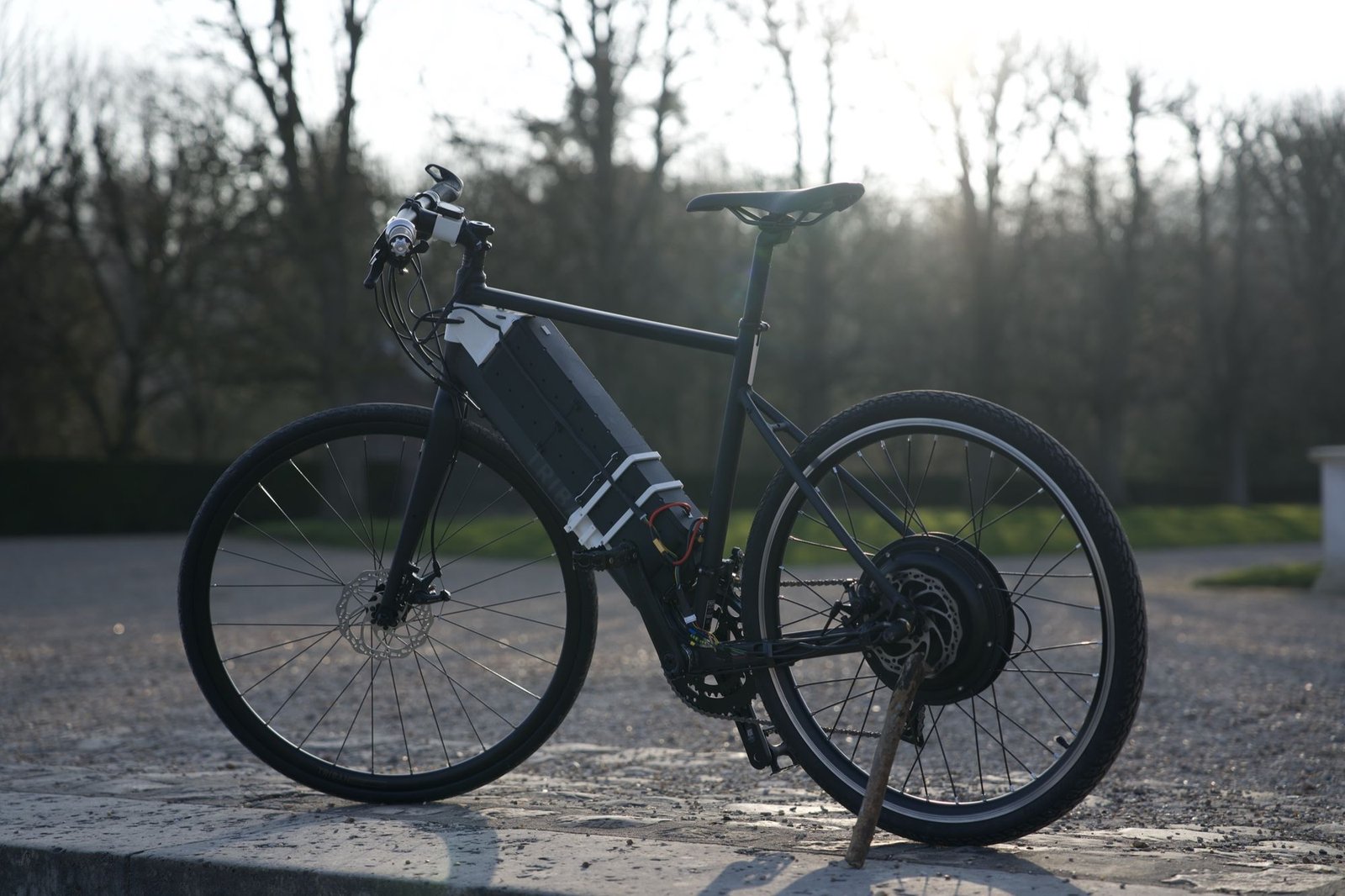
Prototype 2 in February 2025. -
On the road
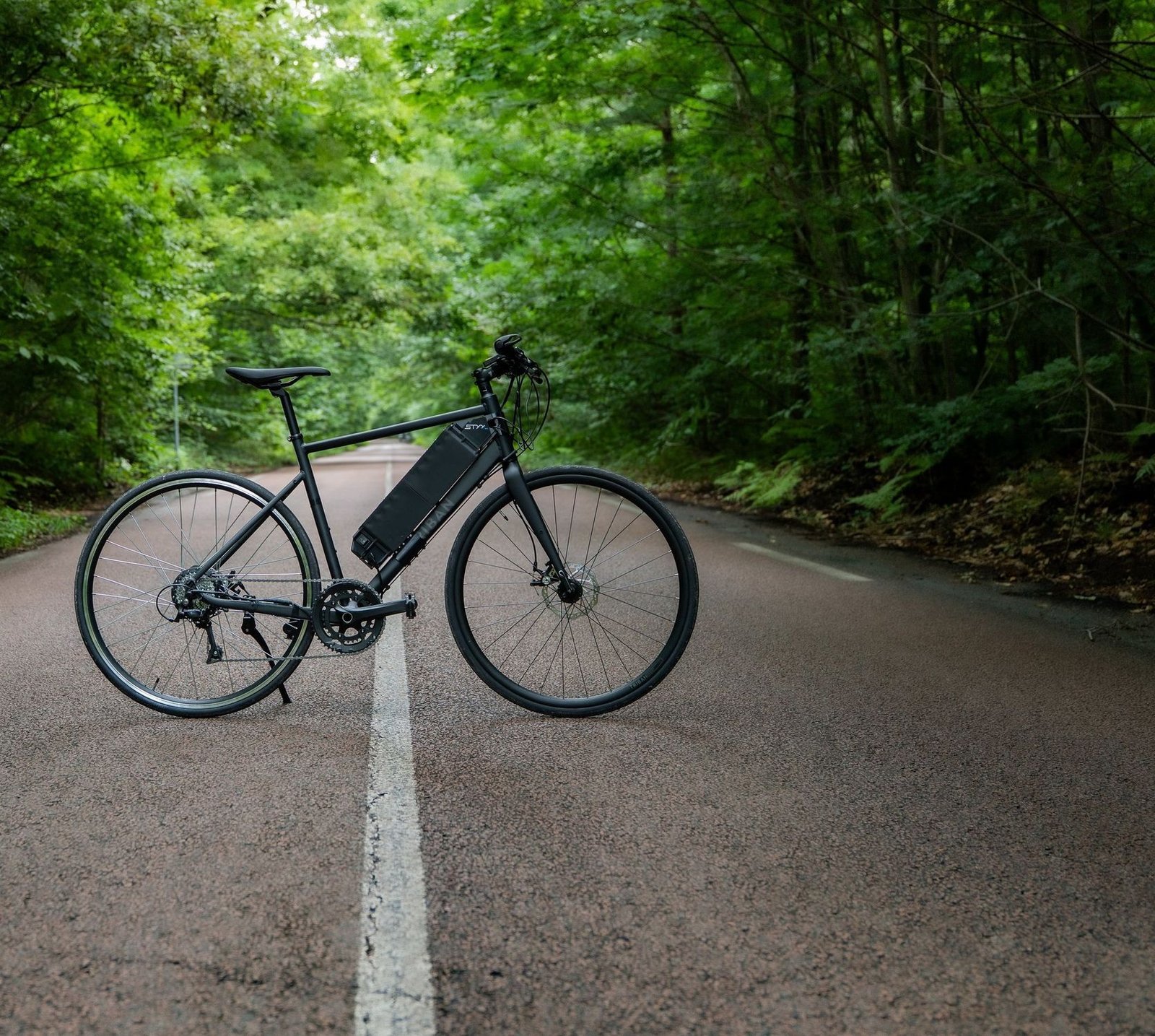
The prototype’s last tests, filmed on the move from October to November 2025.
This page will be updated as the project moves forward.